
A wall can look freshly painted and still reveal every shortcut once the afternoon light hits it. That is why spray versus roll painting is not simply a question of speed. The right method depends on the surface, the condition of the room or exterior, the coating being used, the level of protection required, and the finish you expect when the job is complete.
Professional painters use both methods, often on the same project. Spraying may create the smooth first coat on broad siding or cabinet doors, while rolling helps work paint into masonry, textured drywall, or areas where overspray would be a concern. Choosing well starts with understanding what each method does best.
Spray Versus Roll Painting: The Core Difference
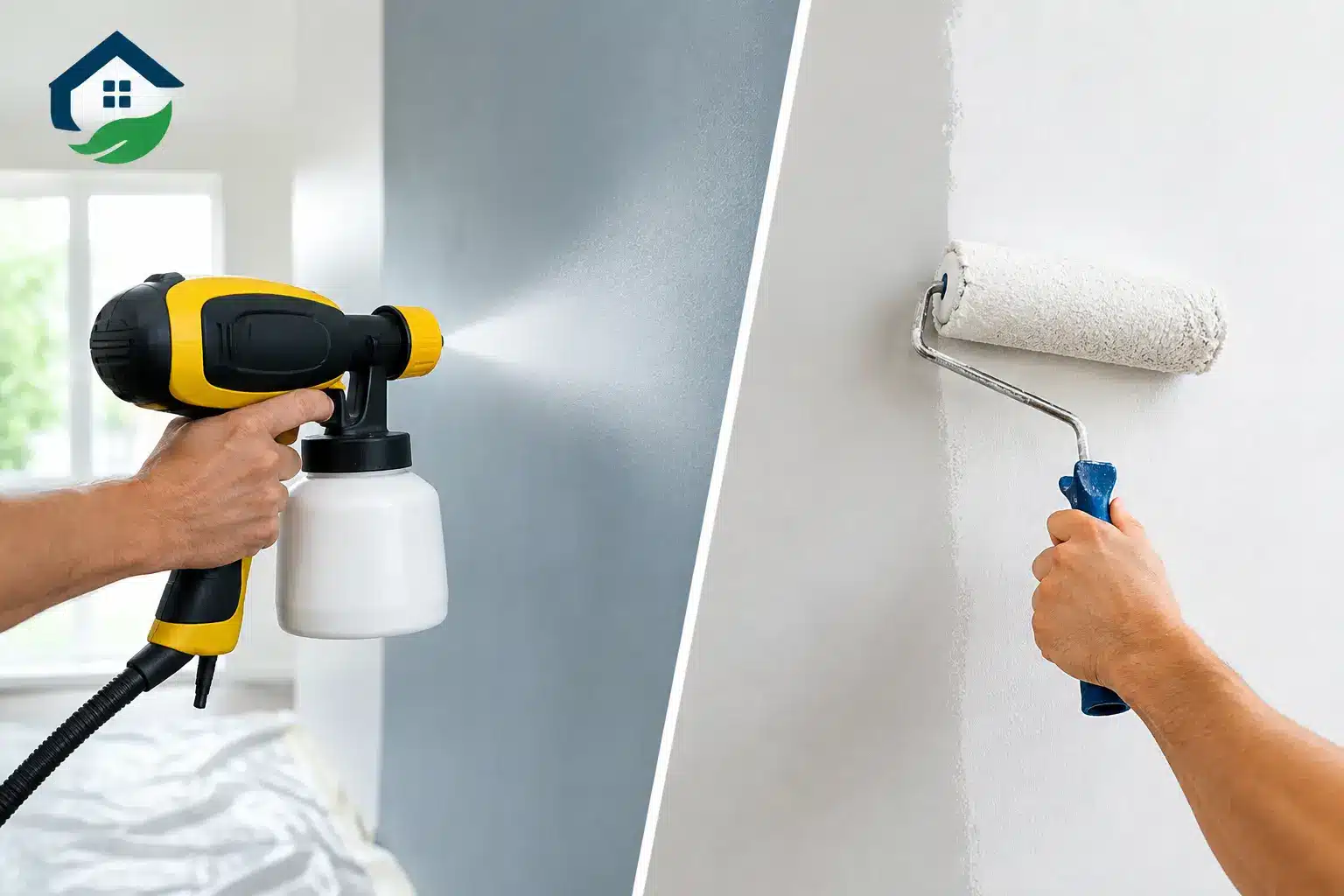
Spraying applies paint as a fine, even mist using specialized equipment. It can cover large, open surfaces quickly and produce a smooth appearance with very little texture. The trade-off is preparation. Floors, windows, landscaping, trim, fixtures, vehicles, and nearby surfaces must be carefully masked and protected before spraying begins.
Rolling applies paint with a roller cover, usually after cutting in edges with a brush. It is more controlled, requires less masking, and is often the practical choice for occupied interiors. A roller leaves a slight texture, sometimes called stipple or roller nap, but a skilled painter can keep that texture uniform and attractive.
Neither method is automatically better. A smooth cabinet door, a stucco exterior, and a furnished living room have very different needs.
When Spraying Is the Better Choice
Spraying is especially effective where a consistent, smooth finish matters and the work area can be fully protected. Cabinet painting is a common example. Doors and drawer fronts sprayed in a controlled area can achieve a refined, factory-like finish that is difficult to reproduce with a roller.
Exterior projects can also benefit from spraying. Long runs of siding, fences, soffits, and large areas of trim can be coated efficiently once preparation is complete. On a properly prepared exterior, spraying helps painters maintain a wet edge over broad sections, which can reduce visible lap marks.
Spraying is also useful for irregular profiles. Shutters, spindles, louvered doors, brick, rough-sawn wood, and detailed trim have grooves and angles that are slow to coat by hand. A sprayer reaches those recesses more evenly, although back-rolling or back-brushing is often still needed to work the paint into the surface.
The biggest benefit is efficiency on open, accessible areas. That does not always mean a lower total price. If extensive masking, furniture moving, containment, and cleanup are required, much of the time saved during application can be spent in preparation.
Spraying Requires More Than a Paint Gun
A quality sprayed finish depends on careful setup and experienced technique. Paint must be properly selected and sometimes adjusted for the equipment. The painter needs to control pressure, tip size, distance from the surface, overlap, and drying conditions. Applying too much material can cause runs and sags. Applying too little can leave thin coverage or an uneven sheen.
Denver-area weather adds another consideration for exterior work. Wind can carry overspray, while hot sun and low humidity can make coatings dry quickly. Temperature, surface moisture, and the manufacturer’s application requirements all matter. A dependable contractor plans around those conditions rather than treating spray equipment as a shortcut.
When Rolling Is the Smarter Option
Rollers are often the best choice for interior walls and ceilings, particularly in furnished or actively used spaces. Protection is still necessary, but the setup is generally simpler than full spray masking. That can make rolling more efficient for a single room, a small office, touchup work, or a quick pre-listing refresh.
Rolling also works paint into porous and textured surfaces. Stucco, masonry, heavy wall texture, and previously weathered siding may need the pressure of a roller to ensure the coating reaches low spots and bonds consistently. For exterior siding, painters commonly spray the paint on and then back-roll it. This combines the coverage speed of spraying with the penetration and adhesion benefits of rolling.
Roller selection matters. A short nap creates a smoother finish on smooth drywall and trim boards, while a thicker nap carries more paint into textured surfaces. Using the wrong roller can leave excess texture, missed recesses, or uneven coverage. The goal is not merely to get paint on the wall. It is to produce a uniform finish that holds up under normal use and changing light.
Rolling Offers Better Control Around Finished Spaces
A roller gives the painter immediate control over where paint lands. That is valuable near carpet, cabinetry, built-in shelving, finished flooring, and detailed fixtures. It also makes small repairs easier to blend when the existing wall has a rolled texture.
For homeowners staying in the house during an interior project, rolling can reduce disruption. There is less need to seal off large sections of the home, although dust control, floor protection, and careful masking remain part of a professional process.
Finish Quality: Smooth Is Not Always Better
Many people assume sprayed paint always looks superior. On doors, cabinets, trim, and smooth metal surfaces, that can be true. A sprayed coating can look exceptionally smooth when the substrate has been repaired, sanded, primed, and cleaned correctly.
But smooth paint does not hide flaws. In fact, it can make dents, patched areas, grain patterns, and uneven drywall more noticeable. Before selecting a spray finish for cabinets or trim, the surface condition should be evaluated honestly. The preparation may involve cleaning, degreasing, sanding, caulking, filling, priming, and multiple finish coats.
For walls and ceilings, a consistent roller finish is usually expected and can be the better visual match. It softens minor surface irregularities and blends naturally with existing painted areas. The right finish is the one that suits the substrate and looks intentional throughout the space.
Cost, Timing, and Preparation
The application method is only one part of a painting estimate. Material quality, repairs, access, surface prep, number of coats, protection needs, and project scheduling affect the final cost.
Spraying can reduce application time on large exterior surfaces, empty properties, or detached cabinet components. Yet it may require more labor before a drop of paint is applied. Every window, roofline, light fixture, plant bed, and adjacent surface needs protection from overspray. On a small job, rolling may be faster overall because the prep is more limited.
Rolling can take longer across a large, open area, especially where cutting in is extensive. Still, it may provide better value when only one or two rooms need painting or when the property must remain functional during the work.
A clear estimate should explain the method being recommended and why. If a contractor proposes spraying, ask how overspray will be contained and whether any surfaces will be back-rolled. If rolling is proposed, ask about roller nap, repair preparation, and how the finish will be kept uniform from wall to wall.
The Best Method Is Often a Combination
The most effective painting plan is frequently not spray or roll. It is spray and roll, with each method used where it serves the project best. A crew may spray exterior siding and back-roll it for coverage, brush detailed edges, roll textured walls, and spray cabinet doors off-site or in a protected workspace.
This approach is especially useful when a project includes repairs and multiple materials. New trim, patched drywall, existing siding, and cabinet boxes do not all respond the same way to paint. Matching the application method to the surface helps prevent uneven sheen, thin coverage, visible texture changes, and premature wear.
For a home seller working on a deadline, the decision may favor efficient rolling in occupied rooms and targeted spraying for doors or trim. For a homeowner updating kitchen cabinets, the smoother sprayed finish may justify the extra preparation. For a small commercial space, containment and scheduling may matter as much as the finish itself.
How to Make the Right Choice for Your Property
Start with the condition of the surface, not the method. If there are peeling areas, cracked caulk, damaged trim, drywall patches, or moisture concerns, those issues need to be addressed before painting. Even the best spray equipment cannot compensate for poor preparation.
Next, consider the space. Is it empty or furnished? Is it an open exterior wall or a room with carpet and built-ins? Does the existing texture need to be matched? Are you looking for a durable cabinet finish, a clean resale update, or long-term exterior protection? These answers guide the recommendation.
At Majestic Painting, the goal is to provide an itemized recommendation that fits the property, the budget, and the expected result. A walkthrough should make the process clear before work begins, including preparation, coating selection, application method, timing, and protection of surrounding surfaces.
The best painting method is the one that gives your property the right balance of appearance, durability, cost, and disruption. Ask for the reasoning behind the recommendation, not just the price, and you will be in a much better position to choose a finish you will be happy to live with.