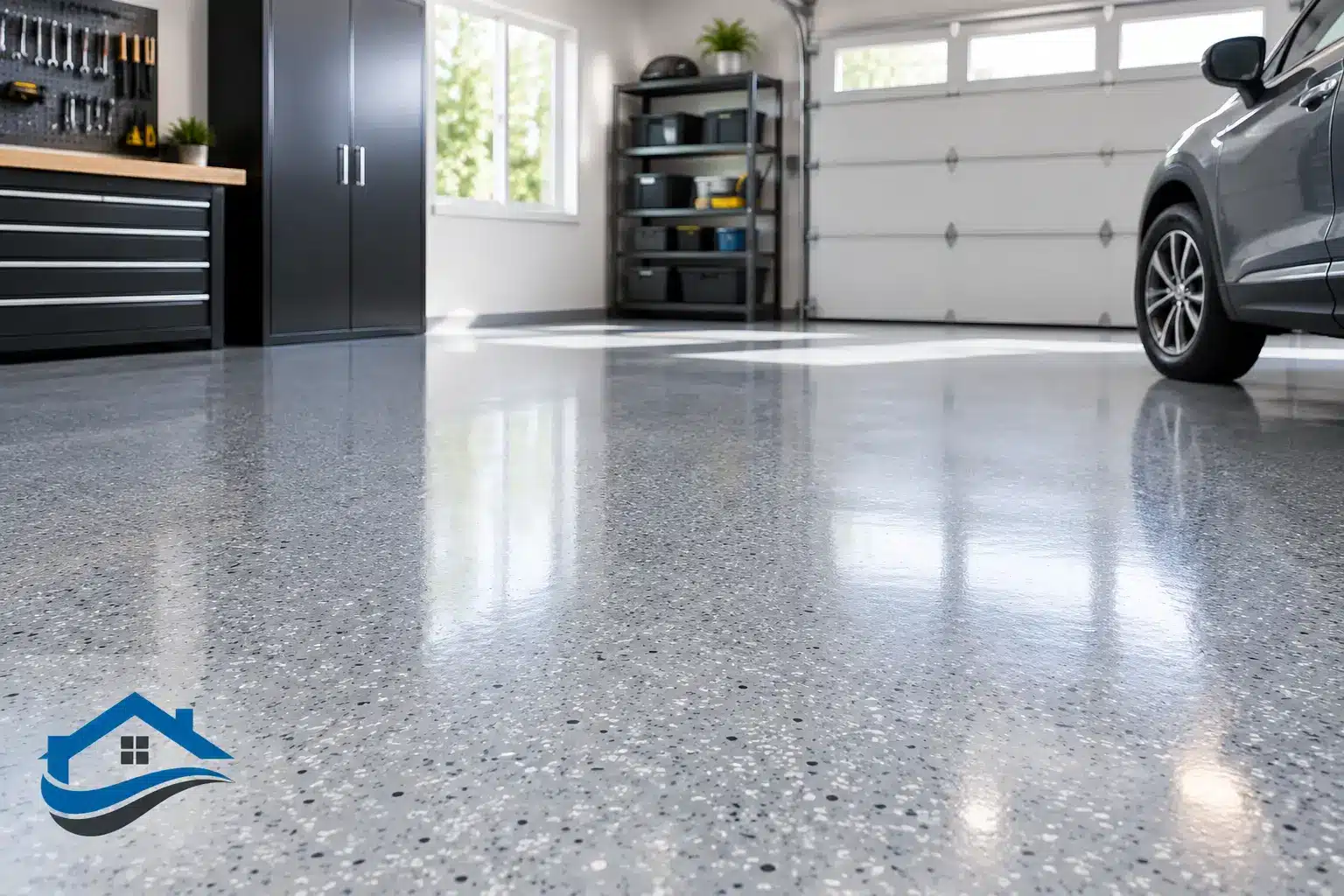

A garage floor takes more abuse than almost any other surface in a home. Road salt, snowmelt, hot tires, dropped tools, oil drips, lawn equipment, and storage bins can leave bare concrete dusty, stained, and difficult to clean. Epoxy flooring gives that hardworking space a finished surface that is easier to maintain and more comfortable to use.
For Denver-area homeowners, the appeal is practical as much as visual. A properly installed coating can help protect concrete from routine wear while making a garage, workshop, basement, or small commercial space look brighter and more organized. The key word is properly. The final result depends far more on concrete preparation, moisture conditions, and product selection than on the color chip you choose.
What Epoxy Flooring Is – and What It Is Not
Epoxy is a resin-based coating applied over prepared concrete. Once the material cures, it creates a hard, bonded surface that can resist many common garage stains and make sweeping or mopping much simpler. It is often finished in a solid color or with decorative vinyl flakes, then protected with a clear topcoat.
People sometimes use the term “epoxy floor” for every type of garage coating. In reality, there are several systems, including epoxy, polyaspartic, and polyurethane topcoats. Each has different curing times, flexibility, UV resistance, and installation requirements. A good recommendation starts with how the space is used, the condition of the slab, and the project schedule.
A coating is not a cure for major concrete problems. If a slab has active moisture issues, severe deterioration, widespread cracking, or movement, those conditions need to be evaluated before coating work begins. Small cracks can often be repaired as part of the preparation process, but a floor that is failing underneath will eventually show through even the best-looking finish.
Why Homeowners Choose Epoxy Flooring
The most immediate change is usually cleanliness. Bare concrete can release dust and absorb spills, which makes a garage feel dirty even after it has been swept. A coated floor creates a more closed, washable surface. Oil, tire marks, and tracked-in grime are generally easier to address before they become permanent stains.
Appearance matters, too. Light gray, tan, or flake finishes can reflect more light and make a dark garage feel more finished. That can be especially useful for homeowners who use the space as a workshop, home gym, storage area, or entry point into the house. Rather than treating the garage as unfinished square footage, a coating helps it feel like a functional extension of the property.
For small commercial spaces, the benefits may include a cleaner customer-facing appearance and a surface that holds up better to routine traffic. However, commercial floors need to be specified carefully. Vehicle type, equipment weight, cleaning products, and traffic volume all affect which coating system makes sense.
The Work Below the Coating Determines the Result
A floor coating is only as dependable as its bond to the concrete. That is why surface preparation should never be treated as an optional add-on. Before a coating is applied, the concrete needs to be inspected for contamination, moisture, old coatings, cracks, and surface weakness.
Professional preparation often includes mechanical grinding to create the right surface profile for adhesion. This removes weak material and opens the concrete so the coating can bond correctly. Oil spots and other contaminants may require additional treatment, while cracks and spalls may need repair before the base coat goes down.
This part of the process is dusty and detail-oriented, but it is where long-term performance is won or lost. Simply rolling a coating over a smooth or dirty slab may look acceptable at first. Over time, poor preparation can lead to peeling, bubbling, hot-tire pickup, or uneven wear.
Moisture deserves special attention
Concrete can hold and transmit moisture even when it looks dry on the surface. Colorado’s changing temperatures, snowmelt, and garage conditions can all make moisture evaluation worthwhile. If vapor is moving through the slab, it can interfere with adhesion and cause coating failures.
The right approach depends on the slab and the product system. In some cases, a moisture-mitigating primer may be appropriate. In others, it may make more sense to address drainage, grading, or a larger concrete issue before investing in a coating. Clear recommendations upfront are better than an attractive floor that does not last.
Choosing a Finish That Fits the Space
Solid-color epoxy flooring has a clean, uniform appearance and can work well in utility rooms, workshops, and commercial settings. Decorative flake systems are a popular garage choice because they add texture, soften the look of everyday dust, and create a more finished appearance. Flakes also come in a range of blends, from subtle gray and black to warmer tan combinations.
Gloss level is another decision worth discussing. A high-gloss floor reflects light beautifully, but it can also show dust, footprints, and tire marks more readily. A satin or lower-sheen topcoat may be easier to live with in an active garage. For areas that may get wet, texture or an anti-slip additive can improve traction, though more texture can make deep cleaning slightly more involved.
Sun exposure matters as well. Standard epoxy can amber or fade when exposed to strong ultraviolet light over time. If the garage door stays open often or the floor is in a sunlit area, a UV-stable topcoat may be the better choice. This is one of the reasons a contractor should recommend a system rather than offering one coating for every situation.
Cost Depends on More Than Square Footage
It is reasonable to want a price per square foot, but that number rarely tells the whole story. A clean, newer slab with minimal repairs is a different project from an older garage with oil saturation, peeling paint, cracks, and moisture concerns. The coating system, decorative finish, topcoat, access, and cure-time requirements also affect the investment.
A transparent estimate should separate preparation, repairs, materials, and finish options so you can see what is included. Lower quotes may leave out grinding, crack repair, a protective topcoat, or the warranty support that matters if an issue appears later. The goal is not to pay for extras you do not need. It is to avoid paying twice for a floor that needs to be redone.
When Epoxy May Not Be the Best Choice
Epoxy flooring is an excellent fit for many garages, but it is not always the first project to tackle. If water regularly enters under the garage door, if the concrete is heaving, or if there is significant structural cracking, resolving the underlying condition should come first. A coating can protect a sound slab, but it cannot stop outside water from entering the space.
It may also be worth comparing epoxy with a faster-curing polyaspartic system when timing is tight. Some projects need a quick return to service, while others benefit from the working time and build characteristics of epoxy. There is no one right answer for every floor.
Plan the Project Around Real Use
Before scheduling, think about how long the vehicles and stored items can be out of the garage. Coatings need time to cure, and that timing varies by product, temperature, and system. Rushing cars, heavy equipment, or storage back onto a new floor can damage a finish before it reaches its intended strength.
It also helps to decide whether the floor project should be coordinated with other updates. Garage walls, trim, drywall repairs, cabinets, and storage improvements are often easier to complete while the space is cleared out. Majestic Painting can review the full scope during a free quote, provide itemized recommendations, and help you choose a finish that fits both the floor and the way you use the space.
A garage floor should make daily life easier, not become another surface you have to worry about. Start with an honest assessment of the concrete, choose a coating system that matches the conditions, and give the preparation work the attention it deserves. That is how a practical upgrade becomes one you can enjoy for years.