
A cabinet color can look completely different once the sheen is applied. The same warm white that feels soft and classic in a matte sample may look brighter, cooler, or more reflective on a row of kitchen doors. Knowing how to choose cabinet sheen helps you avoid a finish that shows every fingerprint, highlights old door imperfections, or clashes with the rest of the room.
For most homeowners, the right answer is not simply “the shiniest finish is the toughest” or “matte is always more modern.” Cabinet sheen should suit the condition of the cabinets, the amount of natural light, how the kitchen is used, and the level of maintenance you are comfortable with. A thoughtful choice can give painted cabinets the clean, factory-finish appearance people want from a professional refinishing project.
What Cabinet Sheen Actually Changes
Sheen describes how much light a painted surface reflects. Lower-sheen finishes absorb more light and create a softer appearance. Higher-sheen finishes reflect more light, creating a smoother-looking surface with more visible shine.
That reflection affects more than style. It also affects how easily cabinets clean, how much surface texture you see, and whether scratches, grease, and fingerprints stand out. Cabinet doors are handled constantly, especially around pulls, trash drawers, and lower cabinets. A finish that looks great on a wall may not hold up or clean up the same way on cabinetry.
Paint products also matter. A quality cabinet coating from Sherwin-Williams or Benjamin Moore, properly sprayed or applied over thorough prep, will perform differently than standard wall paint in the same sheen. The coating system, sanding, cleaning, priming, and curing process all work together. Sheen is one decision within that larger process.
How to Choose Cabinet Sheen by Room Use
Start with how your household uses the space. A lightly used butler’s pantry or built-in bookcase can support a more design-driven sheen choice. A busy family kitchen needs a finish that can handle routine wiping, cooking residue, and frequent contact.
Matte and Flat Finishes
Flat finishes are generally a poor fit for kitchen cabinets. They have almost no reflection, which can help disguise surface irregularities, but they are harder to clean without leaving marks or burnishing the finish. In a kitchen, where cabinet doors need regular wiping, that trade-off is usually not worth it.
Matte cabinet finishes are more practical than flat finishes when made with a durable specialty coating. They create a quiet, contemporary look that works well with natural wood, stone, and soft neutral colors. Still, matte finishes can show oily fingerprints and may require gentler cleaning. They are often better for lower-traffic built-ins than for the cabinets around a heavily used cooktop.
Eggshell Finishes
Eggshell has a subtle, low-luster glow. It can look inviting and soft, especially in traditional or transitional kitchens. However, it is usually not the first recommendation for frequently used kitchen cabinets. The finish offers limited washability compared with higher sheens, and repeated cleaning can leave uneven spots over time.
Eggshell may make sense for a decorative cabinet area, a laundry room with light use, or cabinetry with noticeable grain and minor surface variation. For the main kitchen, most homeowners are happier with a slightly more durable option.
Satin Finishes
Satin is often the best starting point for painted cabinets. It gives the surface a gentle sheen without looking glossy, cleans more easily than matte or eggshell, and does a reasonable job of minimizing minor imperfections. It is a popular choice for homeowners who want cabinets to feel updated without making the finish the center of attention.
Satin works especially well in kitchens with plenty of natural light. Colorado sunlight can be intense, and a lower-reflective satin finish helps prevent cabinets from feeling overly shiny during the brightest parts of the day. It also pairs well with both warm and cool whites, soft grays, greiges, navy, sage, and other current cabinet colors.
The trade-off is that satin may not be as easy to wipe down as semi-gloss in a very active kitchen. It can also show hand oils on dark colors, particularly on cabinets without hardware. Adding pulls or knobs reduces direct contact with painted door fronts and helps preserve the finish.
Semi-Gloss Finishes
Semi-gloss is a practical choice for busy kitchens, laundry rooms, bathrooms, and commercial breakroom cabinetry. It has stronger moisture resistance and is generally easier to clean, making it well suited to homes with children, pets, frequent cooking, or renters.
The downside is visibility. Semi-gloss reflects enough light to reveal dents, wood grain, old brush marks, uneven joints, and poor drywall-like patching on cabinet faces. If the doors have been properly repaired, sanded, and refinished, that may not be a concern. But on older cabinets with lots of wear, the shine can draw attention to flaws that satin would soften.
Semi-gloss also creates a more traditional, polished look. It can be a strong match for crisp white cabinets, detailed door profiles, and spaces where homeowners want a bright, clean appearance. It is less forgiving in a modern kitchen built around flat-panel doors and low-contrast finishes.
High-Gloss Finishes
High-gloss cabinetry is striking when executed well. It reflects substantial light and can make a compact kitchen feel brighter and more tailored. It is often used in contemporary designs, especially with sleek slab doors and simple hardware.
It is also the least forgiving choice. Every dent, scratch, fingerprint, sanding mark, and alignment issue becomes easier to see. High-gloss finishes demand excellent cabinet preparation, controlled application, and careful curing. They are not usually the best value for homeowners who want a durable refresh of existing cabinets rather than a highly polished custom-cabinet look.
Match the Sheen to Cabinet Condition
Before choosing a sheen, look closely at the cabinet boxes and doors in daylight. Raised-grain oak, old water marks, chipped edges, and previous touchups do not automatically rule out painting. They do mean surface preparation and sheen selection deserve more attention.
Lower sheens are more forgiving on cabinets with mild texture or small age-related imperfections. Satin can give these cabinets a refined update while keeping visual distractions to a minimum. Semi-gloss can still work, but it requires more extensive repair and sanding to achieve an even result.
If your cabinets have failing veneer, loose hinges, swollen particleboard, or deep water damage, paint alone may not solve the problem. Repairs or selective replacement may be the smarter investment. A professional on-site consultation should identify those issues before a color and sheen are finalized, not after the project begins.
Consider Light, Color, and the Rest of the Kitchen
Cabinet sheen should support the room rather than compete with it. High-gloss white cabinets can bounce light around a dark kitchen, but they may feel harsh in a south-facing Denver-area home with strong afternoon sun. A satin white can still brighten the space while keeping reflections calmer.
Darker cabinet colors need particular care. Navy, charcoal, deep green, and black often look richer in satin because the lower reflection keeps the color visually consistent. In semi-gloss, those colors can reveal smudges and create noticeable light streaks across door panels. That does not make semi-gloss wrong, but it is worth viewing a larger sample on an actual cabinet door before committing.
Also consider surrounding finishes. A glossy tile backsplash, polished quartz countertop, and stainless-steel appliances already introduce reflection. Satin cabinets often bring balance. If the room has honed counters, matte hardware, and understated lighting, a bit more cabinet sheen may add welcome definition.
Do Not Judge Sheen From a Small Paint Chip
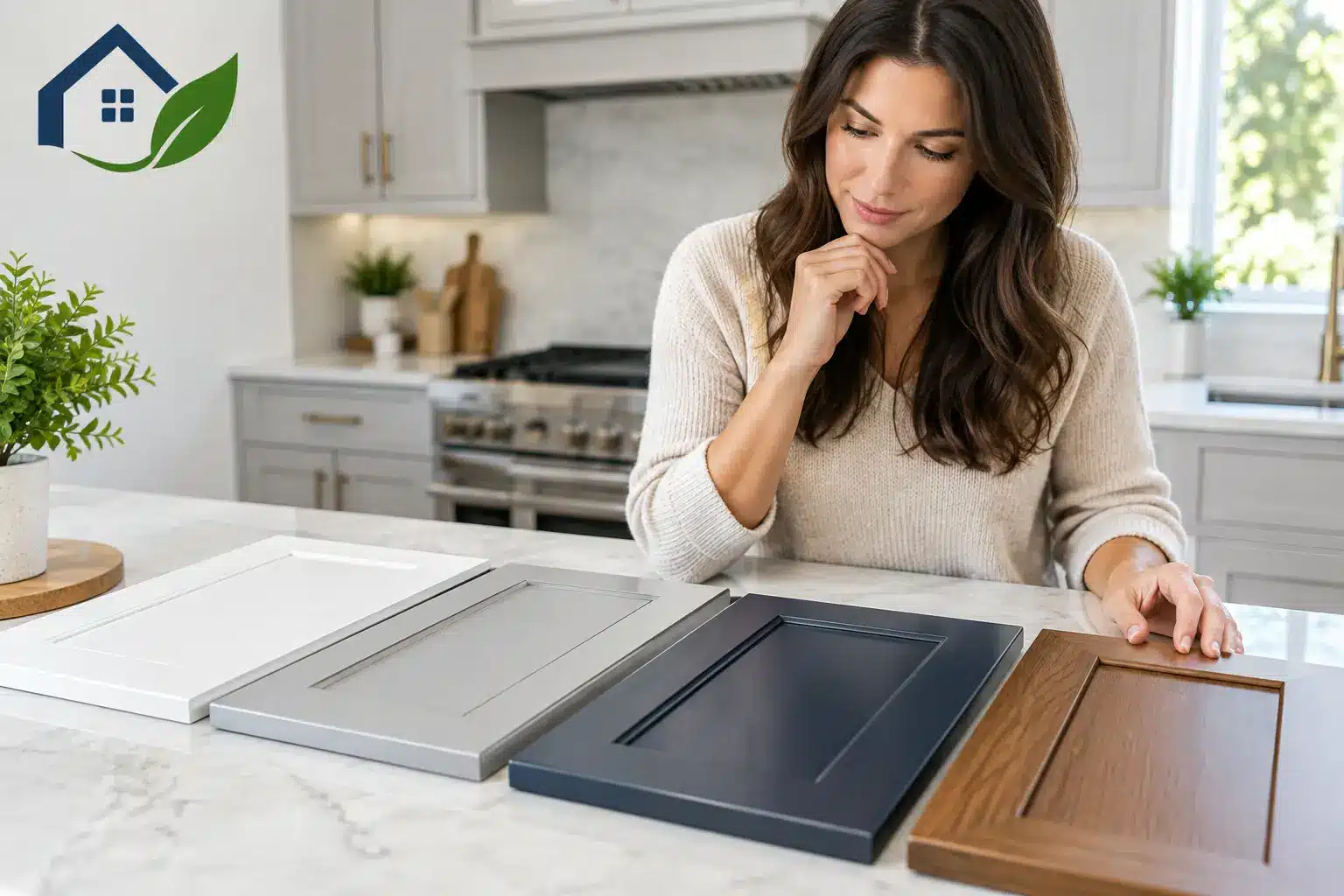
A small color card cannot show how sheen will behave across multiple cabinet doors. Ask to see a sample painted on a removable door, a large primed board, or an inconspicuous area of the kitchen. View it in morning light, evening light, and under the kitchen fixtures.
Pay attention to what you see at an angle, not only straight on. This is where sheen reveals texture, roller marks, and changes in reflection. Wipe the sample gently after it has cured as directed, then see how it handles normal kitchen contact. A finish can be beautiful on day one and frustrating after a week of cooking and cleanup.
A Practical Default for Most Painted Cabinets
For many kitchens, satin provides the most balanced answer. It looks polished, supports a wide range of home styles, handles routine cleaning, and does not exaggerate every small imperfection. Semi-gloss is often the better choice where cleaning and moisture resistance are the top priorities, while matte and high-gloss finishes are more specialized decisions.
The final choice should account for the cabinet condition, the coating product, the application method, and your household’s daily routine. At Majestic Painting Company, cabinet consultations are designed to cover those details before work starts, including repairs, prep, color, sheen, and expectations for the finished surface.
A cabinet finish should make daily life easier, not give you another surface to worry about. Bring a few sheen samples into the actual kitchen, look at them at different times of day, and choose the one that feels right after you picture the fingerprints, cleaning, sunlight, and years ahead.