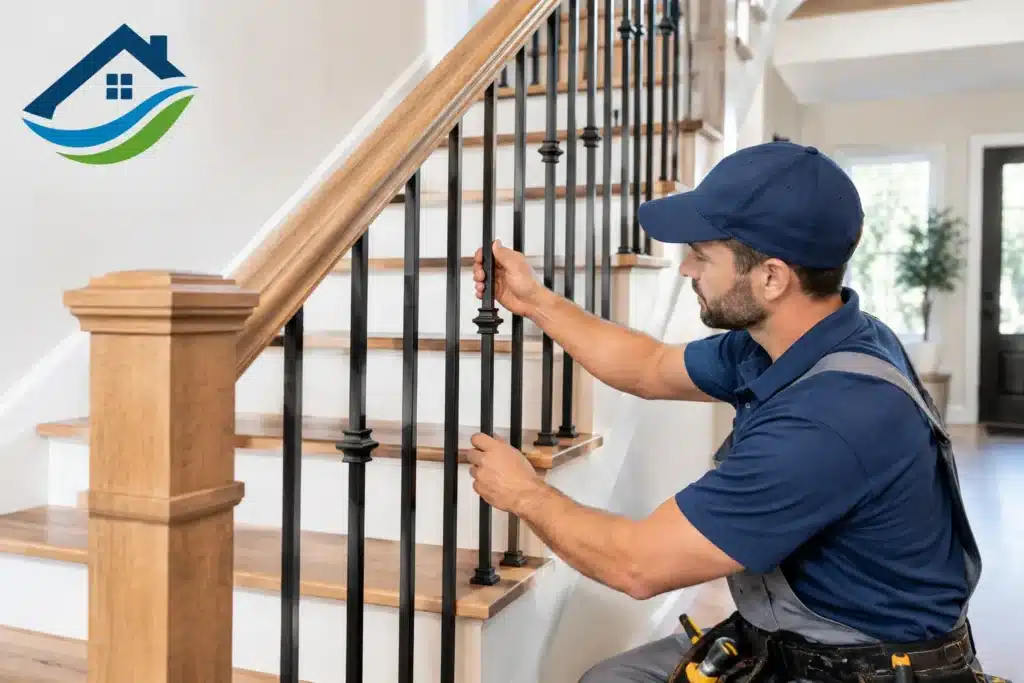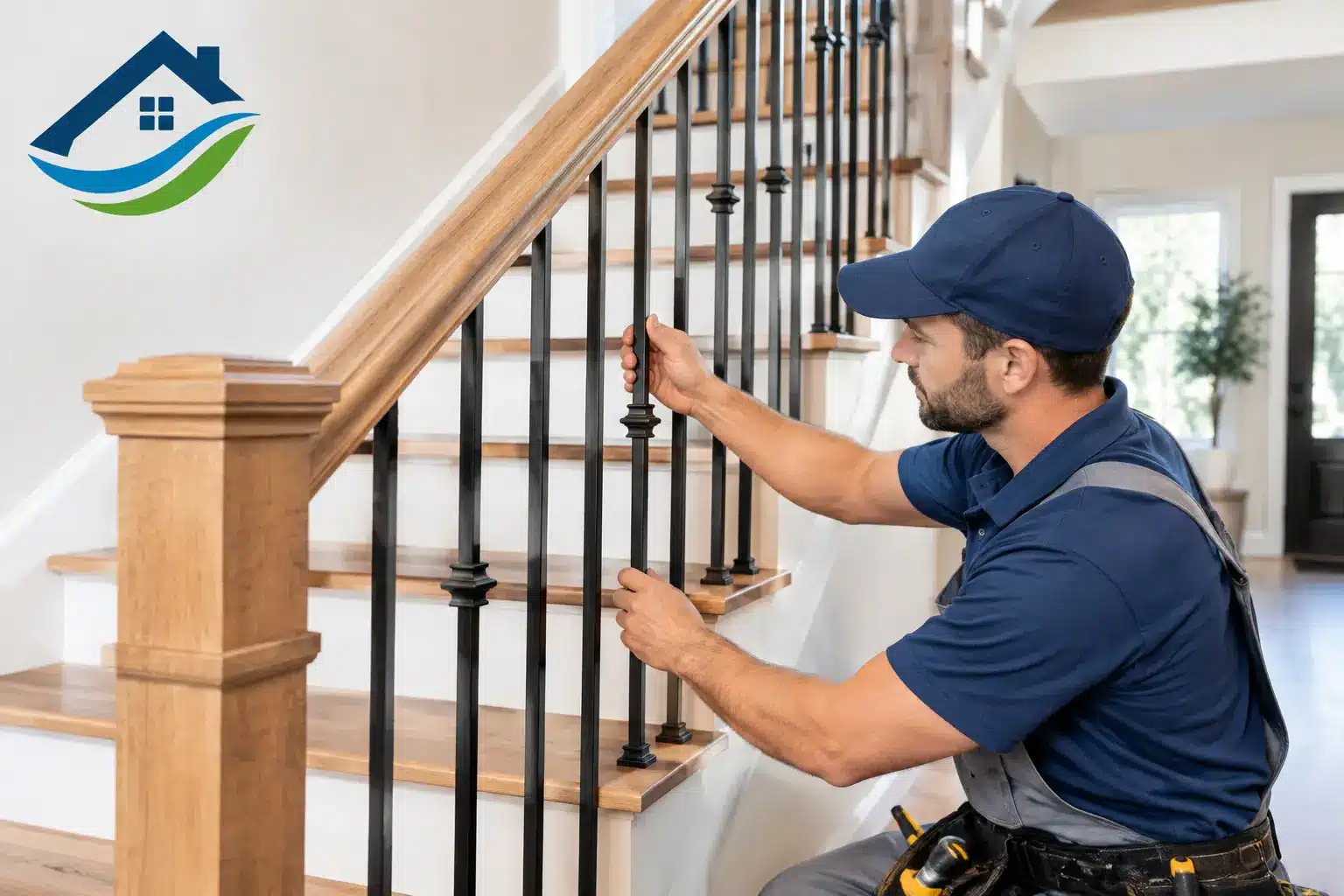

A loose stair rail can turn an everyday trip upstairs into a safety concern. It can also make an otherwise well-maintained entry, hallway, or second-floor landing feel dated. Handrail and baluster replacement gives homeowners a practical way to correct worn components while updating one of the most visible architectural details in the house.
The right scope depends on what is actually failing. Sometimes a handrail only needs to be securely reattached and refinished. In other cases, worn balusters, cracked newel posts, outdated proportions, or a stair layout that no longer meets expectations point to a more complete replacement. A careful walkthrough helps separate a straightforward repair from a project that will improve safety, appearance, and long-term value.
Signs Your Stair Railing Needs Attention
A railing should feel solid the moment someone puts weight on it. Movement at the wall brackets, newel posts, or railing connections is a clear reason to investigate further. Even a small amount of looseness can worsen over time, especially in busy homes where children, guests, and pets regularly use the stairs.
Visible damage matters too. Splintering wood, peeling finish, water staining, cracked parts, rusted metal components, or balusters that are missing or spaced inconsistently can affect both the function and appearance of the stair system. A fresh coat of paint may improve the look temporarily, but paint cannot correct weak fasteners, deteriorated wood, or an unstable post.
Homeowners also choose replacement when the existing rail dates the entire space. Heavy, dark-stained parts can make an entry feel closed in, while a cleaner profile with well-finished wood or painted elements can make the same stairway feel brighter and more intentional. For sellers, this is often a worthwhile detail because buyers notice the entry and stairs immediately.
Handrail and Baluster Replacement Starts With Safety
A railing is more than trim. Its purpose is to provide dependable support and help prevent falls, so installation details should never be treated as an afterthought. The height of the rail, the spacing between balusters, the strength of the newel posts, and the hardware used to secure everything all affect how the finished system performs.
Local requirements can vary by property type, stair configuration, and the extent of the work. A professional should assess the existing conditions before recommending a design or pricing materials. This is particularly valuable in older Denver-area homes, where stair dimensions, wall framing, and earlier remodeling work may create conditions that are not obvious from a quick look.
There is also a practical balance between style and maintenance. Painted balusters and posts can create a crisp, updated contrast with a stained handrail, but they need a durable coating system and proper preparation to hold up to frequent contact. Natural wood brings warmth and can be repaired or refinished, although it may show dents and wear more readily in high-traffic areas. Metal balusters offer a slimmer visual profile and can be easy to maintain, but the surrounding woodwork and attachment points still need precise installation.
Choosing a Style That Belongs in Your Home
The best replacement does not have to be the most elaborate one. It should fit the age, layout, and finish level of the home. A traditional property may look right with square wood balusters and a substantial stained rail. A more current interior may benefit from streamlined square posts, painted balusters, or simple metal details.
Color and sheen are equally important. Bright white is a popular choice for balusters, but a slightly warmer white may coordinate better with existing trim and wall paint. For handrails, a medium wood stain can provide contrast without making the staircase feel heavy. If the surrounding trim is being repainted or the walls are changing color, planning those finishes together prevents an updated railing from looking disconnected from the rest of the space.
This is one reason coordinated property-improvement work can save time. When drywall repair, trim work, stair updates, and painting are planned as one project, the work can be sequenced correctly. Repairs happen before finish coats, new components are protected during painting, and touchups are handled at the end rather than becoming a homeowner’s separate to-do list.
What a Well-Managed Replacement Project Looks Like
The process should begin with a close inspection and a clear discussion about your goals. Are you addressing a loose rail? Trying to update an entry before listing the home? Matching a new floor, cabinet color, or interior paint plan? The answer guides recommendations on materials, labor, timing, and finish options.
Before work begins, confirm what will be removed, what will be reused, and what adjacent areas need protection. Existing railings can leave marks at walls, flooring, or stair treads once they come out. A complete estimate should account for reasonable repair work where it is needed, rather than treating it as an unwelcome surprise after demolition begins.
During installation, careful measuring makes the difference between a finished stairway that looks tailored and one that looks pieced together. Posts need secure anchoring. Balusters need consistent alignment. Handrails need clean transitions and a comfortable grip. Once the components are installed, painting or staining requires the same disciplined preparation as any high-touch finish: sanding, cleaning, priming where appropriate, applying compatible products, and allowing proper dry time.
The final walkthrough is the time to check stability, finish consistency, wall touchups, and cleanup. A contractor should be prepared to address reasonable punch-list items instead of considering the job finished the moment the tools are packed away.
Repair, Refinish, or Replace?
Not every stair railing needs to be replaced. If the structure is solid and the style still works for the home, tightening brackets, repairing small cosmetic damage, and refinishing the wood may be the most budget-conscious choice. This approach is especially effective when the handrail has good proportions and the balusters are intact.
Replacement is usually the better investment when components are unstable, badly damaged, difficult to match, or visually out of step with a larger renovation. It may also make sense if repeated repairs have not solved movement in the railing. Spending a little less now on a patch that fails again in a year is rarely the lower-cost option.
For homes being prepared for sale, scope should match the property and timeline. A clean, secure, freshly finished railing can help buyers see the home as cared for. A highly customized design may not return its full cost if the rest of the property needs more urgent updates. An experienced contractor can help prioritize the work that will make the strongest impression within the available budget.
Questions to Ask Before You Hire
Ask whether the estimate identifies the materials, prep work, finish, and expected schedule. You should also ask how the crew will protect floors and walls, whether related drywall or trim repairs can be handled, and what workmanship support is provided after the project is complete.
Clear communication matters as much as the finished appearance. You want to know who is responsible for the work, when the project will start, how changes will be discussed, and what happens if an issue is found once old materials are removed. Fully insured service and a workmanship warranty offer additional peace of mind when work affects a safety feature in your home.
Majestic Painting helps homeowners coordinate handrail and baluster updates with painting, trim repair, and other targeted improvements, starting with a straightforward consultation and itemized recommendations. Whether the goal is a safer staircase or a more polished first impression, the best next step is an on-site assessment that gives you a clear scope before work begins.