
A gutter system can look like a minor exterior detail until water starts spilling over the edge during a hard Colorado storm. Proper gutter installation for homes directs runoff away from the roofline, siding, foundation, walkways, and landscaping – areas that can become expensive problems when water is allowed to collect in the wrong place.
For Denver-area homeowners, the job is not simply hanging a channel along the roof. Snowmelt, spring rain, hail, wind, and sharp temperature swings all affect how a gutter system performs. The right solution depends on the roof layout, drainage paths, existing trim condition, and how water moves across the property.
Why gutter installation for homes deserves careful planning
Gutters protect more than the foundation. When runoff repeatedly pours over an unprotected roof edge, it can stain siding, rot fascia boards, loosen paint, erode mulch beds, and create icy patches near entries and driveways. Water that pools near the home can also find small cracks in the foundation or basement walls.
A system that is too small may overflow even when it is clean. One that is installed without enough slope may hold standing water, leading to debris buildup, corrosion, and winter freezing. Downspouts that empty too close to the home can move water away from the roof but still leave the foundation exposed.
This is why an on-site assessment matters. A contractor should look at the roof’s square footage, pitch, valleys, dormers, and the locations where water naturally concentrates. They should also inspect fascia and trim before attaching new gutters. Installing a new system over soft, damaged, or deteriorated wood only postpones a repair that should be addressed first.
Choose a system that fits the home
Most residential gutter systems are available in 5-inch and 6-inch profiles. A 5-inch system may work well on a modest roof with straightforward drainage. A 6-inch system provides greater capacity and is often the better choice for larger roof planes, steep slopes, and homes with valleys that funnel a heavy volume of water into one section.
Material selection also affects appearance, upkeep, and budget. Aluminum is a common choice because it is lightweight, rust-resistant, and available in many colors. It works well for most homes and can be formed into seamless lengths on site, reducing the number of joints that may eventually leak.
Steel can offer added strength but requires a quality finish to resist rust. Copper has a distinctive appearance and long service life, but it comes at a higher price and is generally selected for homes where architectural character is a major priority. Vinyl is inexpensive, though Colorado’s temperature changes can make it less durable than metal options over time.
Color matters, too. Gutters can blend into the fascia for a clean look or coordinate with trim, siding, roofing, and exterior paint. If a homeowner is already planning exterior painting, siding repair, or trim replacement, handling those improvements together often produces a more finished result and can prevent duplicate setup work.
Seamless gutters reduce common leak points
Traditional sectional gutters are assembled from shorter pieces. Each seam is a potential future maintenance point, especially where snow, leaves, and water repeatedly collect. Seamless aluminum gutters are custom-formed to the length of each roof edge, so they have fewer joints and a cleaner appearance.
They are not maintenance-free. End caps, corners, outlets, and downspout connections still need to be installed carefully and inspected over time. But fewer long seams generally means fewer opportunities for leaks along straight runs.
Slope, hangers, and downspouts determine performance
Even high-quality materials can fail when installation details are rushed. Gutters need a gradual pitch toward the downspout so water drains instead of sitting in the trough. The slope is subtle enough that it should not look noticeably uneven from the ground, but it must be accurate enough to move water reliably.
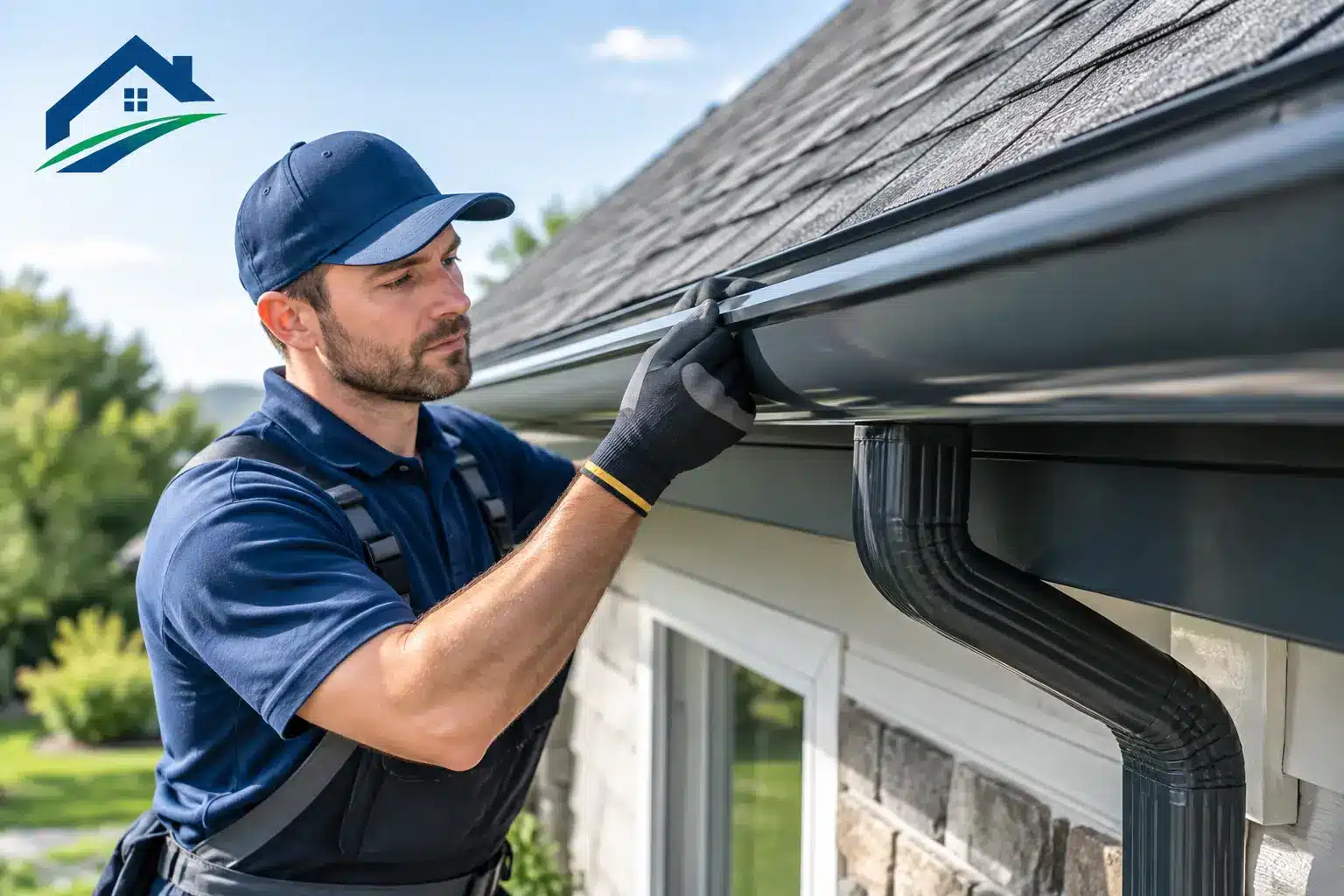
Hangers should be securely fastened and spaced to support the gutter through rain, snow, and ice. Weak or widely spaced hangers can allow a gutter to sag, pulling it away from the fascia and disrupting the planned drainage slope. In some cases, fascia repair or replacement is necessary before a new system can be properly anchored.
Downspout placement deserves the same attention. A long gutter run with only one undersized downspout can overflow at the far end during heavy rain. Roof valleys often need a downspout nearby because they deliver concentrated runoff quickly. The ideal number and location depend on the roof design, not a one-size-fits-all formula.
At ground level, downspout extensions should carry water far enough from the foundation to avoid saturation near the home. The best direction varies by property. An extension should not discharge onto a neighbor’s lot, against a retaining wall, onto a frequently used walkway, or into a spot where it will create erosion or winter ice.
Gutter guards can help, but they are not automatic
Gutter guards are worth considering for homes surrounded by mature trees or rooflines that are difficult to access safely. They can reduce the amount of leaves, needles, and debris entering the gutter, which can lower the frequency of cleaning.
However, guards are not a substitute for a properly designed system. Fine debris can still accumulate, and certain guard styles may affect how fast water enters the gutter during intense rainfall. They also add cost, so they make the most sense when the home’s tree coverage and maintenance needs justify the investment.
A straightforward system that is correctly sized, sloped, and cleaned on a reasonable schedule may be a better value for a property with minimal tree debris. During a consultation, homeowners should ask about the guard type being recommended, the expected maintenance needs, and whether the existing gutters are suitable for the upgrade.
Signs it is time to replace or improve gutters
A visible leak does not always mean the entire system needs replacement. Sometimes a loose fastener, failed sealant joint, or clogged downspout can be repaired. But repeated issues may point to a larger design or installation problem.
Watch for these signs:
- Water spilling over the front or back of the gutter during normal rain
- Sagging sections, separated joints, or gutters pulling away from the fascia
- Peeling paint, stained siding, or rotted trim near the roof edge
- Soil erosion, sunken mulch, or persistent pooling near the foundation
- Downspouts that drain onto walkways, driveways, or areas that freeze in winter
- Water marks in a basement or crawl space after storms or snowmelt
If the exterior is being prepared for sale, new gutters can also improve presentation. Buyers notice neglected roof edges, stained siding, and drainage problems. Addressing them before listing helps show that the property has been maintained with care.
What a clear installation estimate should cover
A useful estimate should do more than provide a single total. Homeowners should be able to see the proposed gutter size and material, color, number and placement of downspouts, removal of existing gutters, and any trim or fascia repairs needed for sound installation.
It should also clarify whether extensions, splash blocks, guards, or disposal are included. If drainage is complicated by a patio, landscape bed, slope, or tight lot line, that conversation should happen before work begins. Clear recommendations allow homeowners to compare options based on long-term value rather than choosing solely on the lowest initial price.
Majestic Painting approaches exterior projects with that same coordinated mindset. When gutters, damaged trim, siding repairs, and exterior paint all need attention, planning the work together helps protect the home and avoids leaving one unfinished issue to undermine the next improvement.
Before the next heavy rain or rapid snowmelt, take a walk around the property and look for where water actually goes. That simple observation gives you a practical starting point for a gutter system that protects the parts of your home you cannot afford to overlook.