
A hallway can look worn long before the rest of a business does. Scuffed corners, dark handprints around doors, chair marks, and faded entry walls all send a message to customers, tenants, and staff. Choosing the best commercial paints for high-traffic areas is less about finding the most expensive can on the shelf and more about matching the coating to how the space is actually used.
For offices, retail spaces, medical suites, apartment common areas, restaurants, and small commercial properties, the right paint should stand up to regular contact and routine cleaning without turning touchups into a visible patchwork. Product quality matters, but surface preparation, sheen, and maintenance expectations matter just as much.
What High Traffic Really Means for Paint
High traffic does not only mean a busy lobby. Any surface that gets frequent contact deserves a more durable paint system. That can include corridors, stairwells, break rooms, restrooms, reception areas, classroom walls, doors, trim, and the wall behind a row of chairs.
The wear itself also matters. A quiet professional office may have light foot traffic but frequent hand contact around switches and door frames. A retail store may deal with carts, product displays, children, and frequent cleaning. A multifamily property may need coatings that can be washed repeatedly between tenants. Each situation calls for a slightly different balance of washability, stain resistance, appearance, and budget.
Paint that performs well in a low-use conference room may not be the right choice for an entry corridor. A dependable contractor should ask how each area is used before recommending a single product for the entire building.
The Best Commercial Paints for High-Traffic Areas
For most occupied commercial interiors, premium acrylic latex paint is the practical starting point. Modern waterborne acrylic coatings dry with low odor, are easier to maintain than older paint systems, and offer strong adhesion when applied over properly prepared surfaces. They are available in finishes designed to resist scuffs, stains, and frequent cleaning.
The best choice within that category is usually a commercial-grade, washable acrylic formulated for high-touch walls. Sherwin-Williams and Benjamin Moore both offer professional product lines with options for offices, retail interiors, multifamily common spaces, and other demanding environments. The specific product should be selected after looking at the existing surface, the cleaning routine, moisture exposure, and the level of daily abuse.
A lower-cost contractor-grade wall paint can make sense in a lightly used back office or storage area. It is usually a poor economy in a lobby, stairwell, or hallway. Those surfaces may need repainting sooner, and they can become difficult to clean without burnishing the finish or leaving a lighter-looking spot.
For walls: washable acrylic with scuff resistance
Walls in corridors, reception areas, waiting rooms, and offices generally benefit from a premium acrylic coating in an eggshell or satin sheen. These finishes offer more cleanability than flat paint while still hiding minor wall imperfections better than glossier finishes.
Scuff-resistant formulations are particularly useful where backpacks, carts, chairs, shoes, or cleaning equipment regularly meet the walls. They do not make a wall indestructible, but they reduce the visible marking that can make a space look neglected within a few months.
Flat or matte paint still has a place. A quality washable matte can give a refined appearance in executive offices, conference rooms, or well-lit lobbies where wall texture needs to disappear. The trade-off is that not every matte coating tolerates aggressive scrubbing. If easy cleaning is a priority, the product specification matters more than the word “matte” on the label.
For doors, trim, and handrails: tougher enamel finishes
Doors and trim take a different kind of punishment than drywall. They are touched, bumped, kicked, and cleaned often. A waterborne alkyd or urethane-modified acrylic enamel is typically a better fit than standard wall paint for these surfaces.
These coatings cure to a harder finish, helping doors and trim resist fingerprints, chips, and repeated washing. Satin or semi-gloss is common for painted trim and doors because it cleans easily and provides definition. Semi-gloss will show more surface flaws, however, so patching, sanding, and priming need to be done carefully before the final coats go on.
For handrails, the coating must also bond securely to the existing substrate. Painted metal, previously coated wood, and bare wood each require different prep and primer decisions. Skipping that step can lead to peeling even when a premium finish paint is used.
For concrete floors: use a purpose-built coating
Paint is not the same thing as a floor coating. In garages, workshops, utility rooms, light-industrial spaces, and commercial back-of-house areas, standard wall or porch paint will not hold up to vehicle tires, rolling equipment, oil, salt, or regular mopping.
Epoxy and high-performance floor coating systems are better suited to these conditions. The right system depends on whether the floor sees foot traffic, vehicles, chemicals, moisture vapor, or temperature swings. Concrete preparation is the deciding factor. A floor must be cleaned, mechanically profiled when needed, and repaired before coating, or even an excellent product can fail early.
Sheen Is a Maintenance Decision
Color gets attention during a commercial painting project, but sheen often has the larger effect on long-term upkeep. Higher sheens are usually easier to wipe clean, yet they reflect more light and reveal dents, drywall repairs, roller marks, and uneven texture.
For many commercial walls, eggshell or satin provides the best middle ground. Eggshell has a softer look and works well in professional offices, while satin is often the better choice for corridors, break rooms, restrooms, and other spaces that need regular cleaning. Semi-gloss is generally best reserved for doors, trim, and other detailed surfaces.
A fully flat finish can work in large, low-contact areas with good-quality drywall. It can also make future touchups less obvious. But if a maintenance crew regularly scrubs the walls, a washable matte or eggshell is often the safer choice.
Prep Determines Whether the Paint Holds Up
Commercial paint does not hide failed drywall repairs, greasy surfaces, loose caulk, or water damage. It may cover them temporarily, but the same problems will return through the new finish.
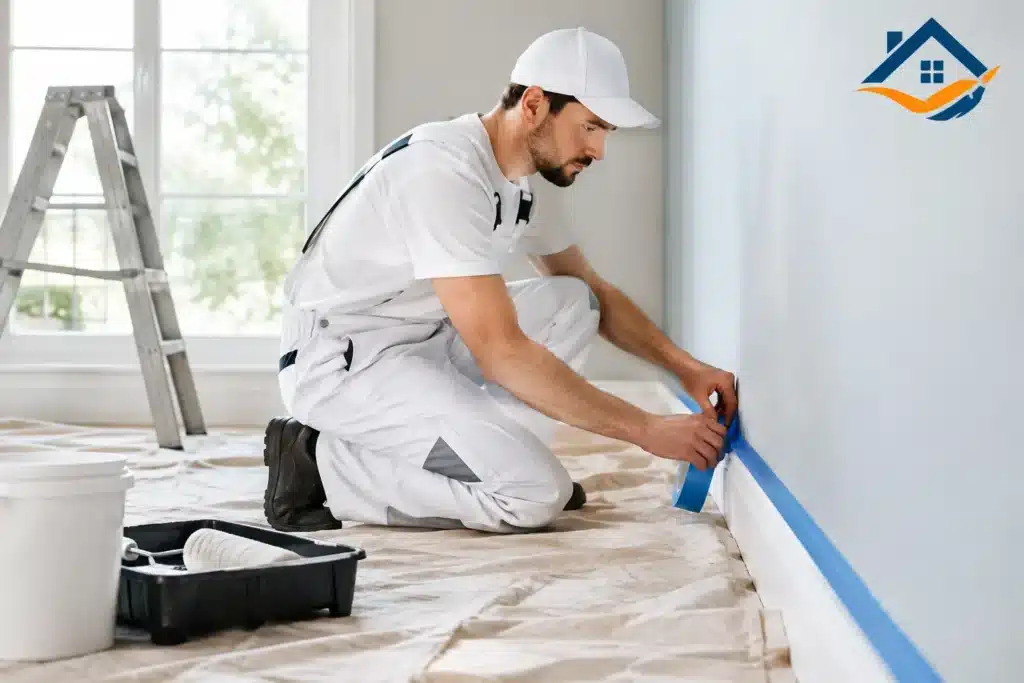
Before painting a high-traffic area, the crew should clean surfaces, remove loose material, repair dents and holes, sand rough patches, caulk gaps where appropriate, and spot-prime repaired or stained areas. Glossy existing paint may need sanding or a bonding primer to give the new coating a surface it can grip.
Moisture problems deserve special attention. Peeling paint around a restroom, exterior door, or window can signal a ventilation issue, a leak, or failed exterior sealing. Repainting without correcting the source is not a long-term repair. This is especially relevant for property managers who need maintenance work that lasts between tenant turnovers.
At Majestic Painting Company, Inc., the recommendation starts with the condition of the surface, not just the desired color. Repairing damaged drywall, correcting failed caulk, and addressing the cause of recurring damage help a commercial paint job deliver better value over time.
Choose Colors That Make Maintenance Easier
The darkest color is not always the most practical choice for a busy space. Dark walls can hide some marks, but they often show dust, scratches, and touchup differences more clearly. Very light colors can make handprints and cart marks stand out around corners and doors.
Mid-tone neutrals are often a smart choice for high-use corridors and common areas. Warm grays, soft taupes, muted blues, and grounded greens can look professional while making everyday wear less noticeable. Using a slightly deeper color below chair-rail height or on an accent wall near an entry can also protect the overall appearance of the space.
If branding calls for a strong color, it may work best on a focal wall or behind a reception desk rather than on every corridor wall. That approach maintains visual impact without creating a large surface that requires frequent touchups.
Plan for Cleaning and Touchups Before the Job Starts
Even the best commercial paint needs sensible maintenance. Cleaning crews should use the mildest effective cleaner and a soft cloth or nonabrasive sponge. Harsh scrub pads can burnish the finish, especially on darker colors or lower-sheen paints.
Save labeled touchup paint from the project, including the color name, sheen, product line, and date of application. Paint ages, and sheen can vary slightly between batches. For a small repair, feathering paint into the surrounding area is usually less noticeable than applying a hard-edged patch.
A good painting scope also identifies which surfaces receive the higher-performance products. Spending more on lobby walls, doors, corridor trim, and stairwells while using a suitable standard coating in low-contact rooms can keep the budget focused where durability has the greatest payoff.
The right finish should make a busy property easier to run, not harder to maintain. A clear on-site assessment, honest product options, and proper preparation give owners and managers a paint plan that still looks cared for after the first rush of daily traffic.