
A small soft spot beside a window can turn into a much larger repair after one Colorado winter. Siding and trim repair is not just about restoring curb appeal. It is often the work that stops water from reaching sheathing, insulation, framing, and interior drywall. Addressing the problem early usually gives homeowners more control over the budget, the schedule, and the final appearance.
Exterior damage is easy to overlook because it develops gradually. Paint may peel along a lower board, a trim joint may open slightly, or a piece of siding may begin to cup after repeated sun exposure. Those details are worth a closer look, particularly on sides of the home exposed to strong afternoon sun, wind-driven rain, or snow that sits near the foundation.
Signs You Need Siding and Trim Repair
Paint failure is one of the most visible warning signs, but it does not always mean the paint itself is the problem. If a coating repeatedly peels in the same location, moisture may be entering through an unsealed joint, failed caulking, a flashing issue, or a damaged board. Repainting without correcting the source may make the area look better for a season, then leave the homeowner facing the same issue again.
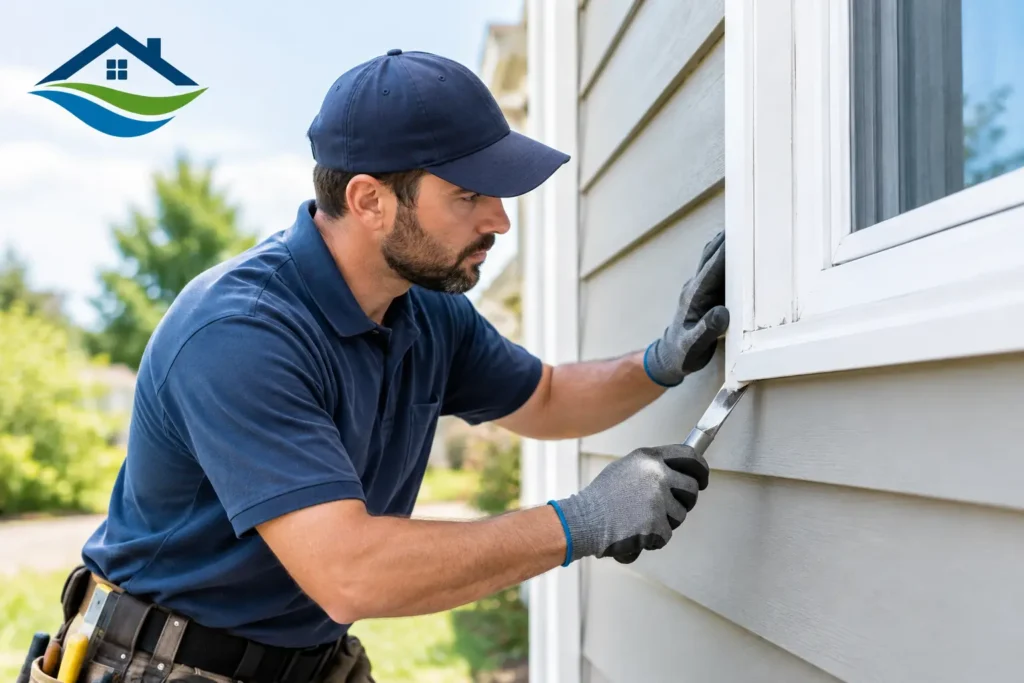
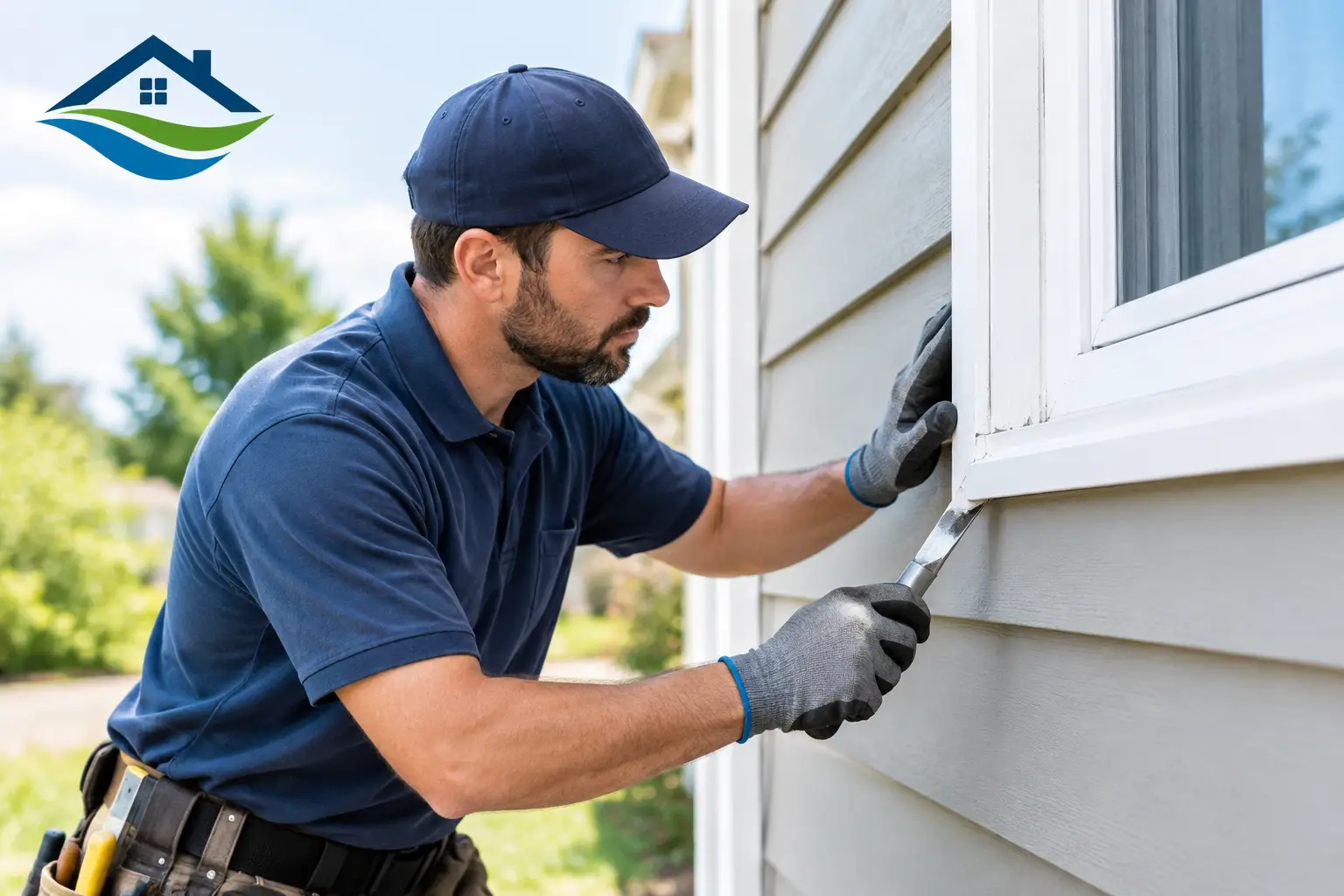
Wood trim deserves particular attention around windows, doors, garage openings, fascia, and chimney transitions. Press gently on suspicious areas with a screwdriver during a visual inspection. Wood that feels soft, flakes apart, or gives under light pressure may have rot beneath the surface. Cracks, open seams, dark staining, and swollen edges can also point to moisture exposure.
Siding can show damage in different ways depending on the material. Wood may split, warp, or rot. Fiber cement can crack from impact or improper fastening. Engineered wood products may swell at unprotected edges. Vinyl may become brittle or loose after years of temperature changes. No material is completely maintenance-free, and each calls for a repair method that fits its condition.
Inside the home, unexplained stains near a window or exterior wall, a musty smell, or drywall that feels damp can signal that the issue has moved beyond the exterior finish. These situations call for prompt investigation. The goal is not to assume the worst. It is to find the path of water and correct it before a localized repair becomes a larger restoration project.
What Proper Siding and Trim Repair Involves
A lasting repair starts with an assessment, not a quick coat of paint. The contractor should identify whether the damage is cosmetic, isolated to one or two boards, or connected to a drainage or installation issue. That means looking at the condition of caulk, flashing, gutters, roof edges, window surrounds, and the grade around the home where relevant.
When a board is sound and only the finish has failed, careful preparation may be enough. Loose paint is removed, surfaces are cleaned and sanded, gaps are caulked where appropriate, bare areas are primed, and compatible exterior paint is applied. Surface preparation takes time, but it is what gives a new finish the best chance to hold up through Denver’s sun, hail, snow, and temperature swings.
When wood is soft or structurally compromised, replacement is usually the better value. Filling deeply rotted material may improve the appearance temporarily, but it does not restore the strength of the board or eliminate trapped moisture. A proper replacement includes removing the damaged section, inspecting what is behind it, installing compatible material, sealing vulnerable cuts and edges, and integrating the repair with nearby siding and trim.
The details matter around openings. Window and door trim must be installed and sealed in a way that directs water outward rather than trapping it against the wall. If a repair reveals deteriorated flashing or a gap behind the trim, addressing that condition is more useful than simply installing a new face board. This is where an experienced exterior contractor can help homeowners distinguish between a limited repair and a problem that needs a broader scope.
Repair, Replace, or Repaint?
The right choice depends on the condition of the materials, the age of the exterior, and the homeowner’s plans for the property. A few damaged trim boards on an otherwise healthy home may be a straightforward repair-and-paint project. Widespread rot, recurring moisture damage, or siding that is failing in multiple areas may make selective replacement more practical than repeated patching.
Budget matters, too. A transparent estimate should separate immediate needs from recommended improvements. For example, replacing active rot and sealing vulnerable joints may be the priority, while repainting the entire exterior can be scheduled for a later phase. On the other hand, if a home is being prepared for sale, coordinating repairs with exterior painting often creates a cleaner result and avoids the appearance of mismatched patches.
Material matching can influence the decision. Older wood siding may have a profile that is difficult to duplicate exactly. Fiber cement and engineered wood products may have manufacturer-specific requirements for fasteners, clearances, and paint systems. A repair can still look cohesive, but it requires thoughtful planning and finish work. The lowest upfront option is not always the least expensive once future maintenance and appearance are considered.
Why Caulk, Gutters, and Paint Belong in the Same Conversation
Exterior components work as a system. Good paint slows moisture absorption, but it cannot compensate for missing caulk or water pouring over an overflowing gutter. Likewise, new trim will not stay sound if roof runoff repeatedly hits the same area or if a downspout discharges too close to the wall.
During a repair project, it makes sense to review nearby gutters, downspouts, fascia, and window seals. That does not mean every job needs to become a full renovation. It means the repair plan should address the conditions that caused the damage when they are visible and relevant. Small corrections can protect the work you are already paying to complete.
Paint selection also matters after siding or trim work. Exterior coatings need to suit the material and existing finish, while primer should be chosen for bare wood, repaired areas, or other exposed substrates. Dark colors can look striking, but on certain siding materials and sun-facing elevations, they may increase heat buildup. A contractor can help balance color goals with product recommendations and long-term maintenance expectations.
Planning a Clear Repair Project
Before requesting estimates, take photos of the areas that concern you and note when you first noticed the issue. If water appears after a specific type of weather, mention that. Those details can help during the walkthrough, especially when the damage is intermittent or located high on the home.
Ask for an itemized scope that explains which materials will be repaired or replaced, how surrounding surfaces will be protected, what preparation is included, and whether painting or staining is part of the work. You should also understand what happens if hidden damage is found after a board is removed. Clear communication about possible change orders helps prevent surprises while allowing the contractor to address legitimate conditions uncovered during the project.
Scheduling is worth considering as well. Dry conditions are helpful for many exterior repairs and coatings, but waiting for a perfect season is not always wise if water is already entering the structure. A qualified team can advise on what should be stabilized immediately and what can reasonably wait for a broader exterior project.
For homeowners across the Denver metro area, Majestic Painting can coordinate repair work, surface preparation, and exterior finishing in one organized scope. The process begins with a free consultation and a clear estimate, so you can make decisions based on the condition of your home rather than guesswork.
A repaired board should do more than disappear into a fresh coat of paint. It should help your exterior shed water, hold its finish, and give you confidence that a small problem was handled before it had the chance to become a costly one.