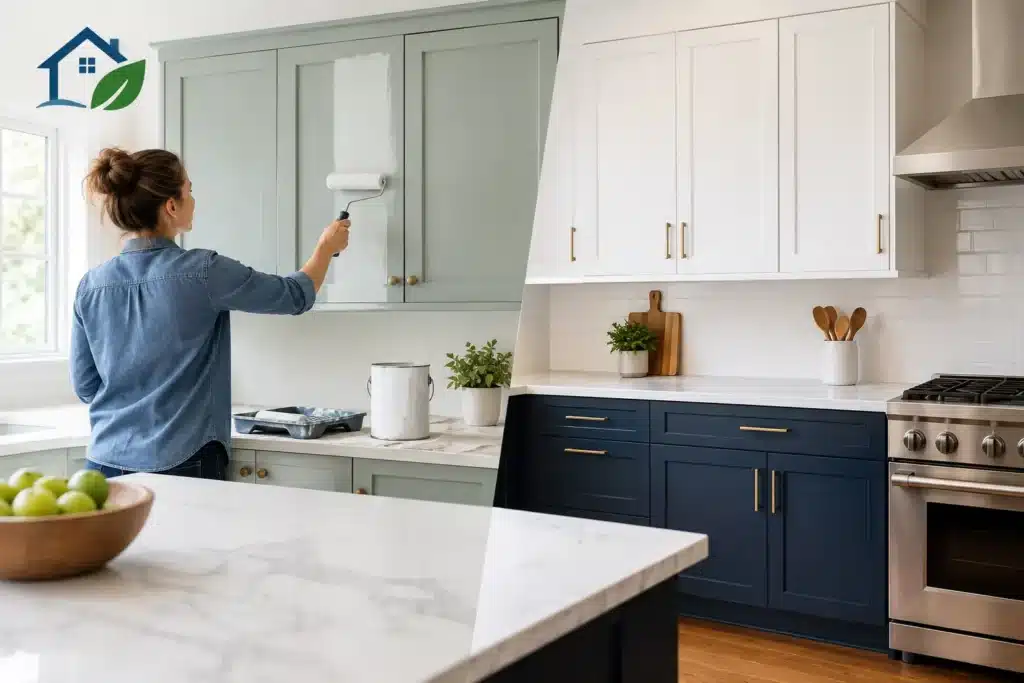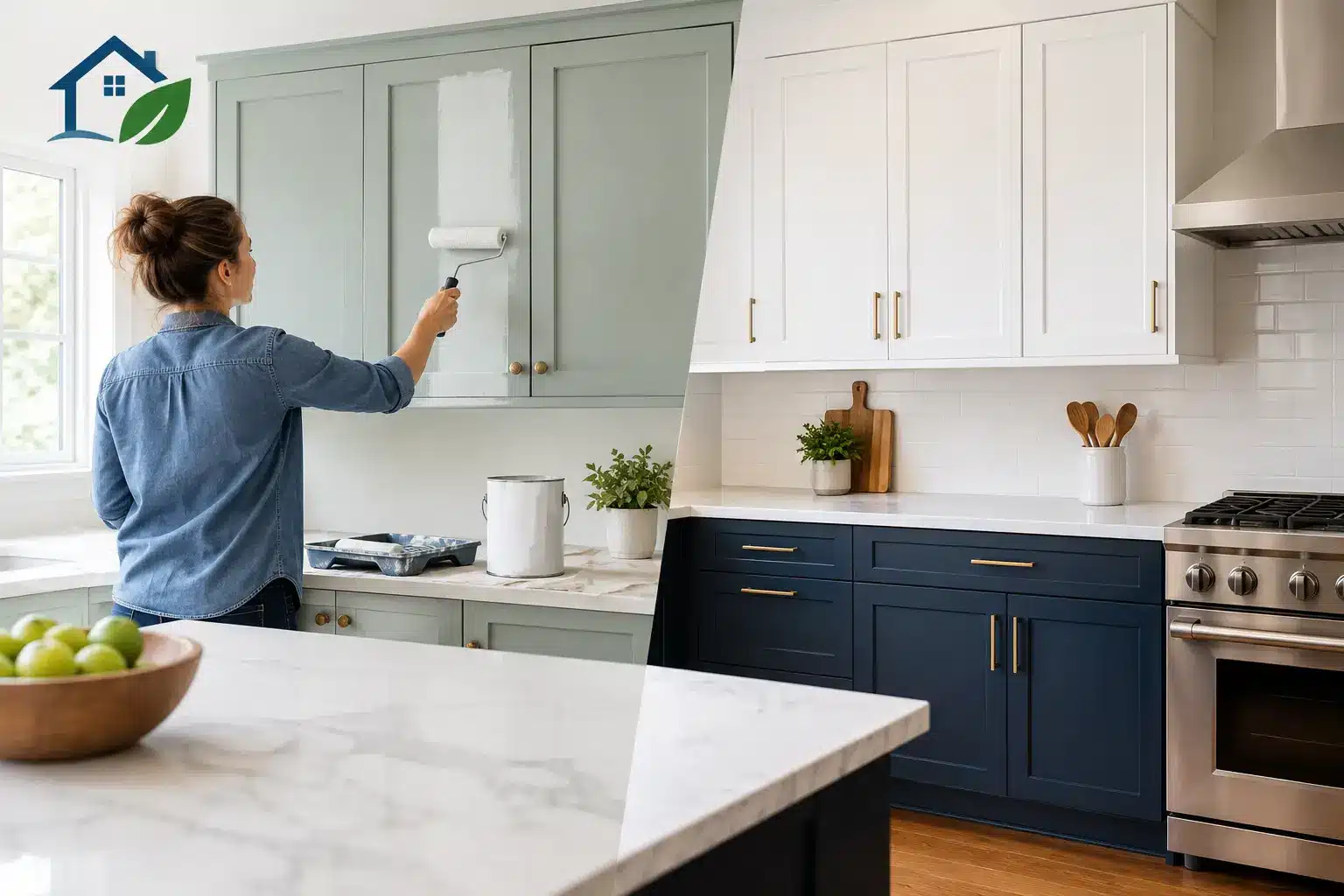

A cabinet color can feel dated long before the cabinet itself is worn out. But when to repaint cabinets is not only a design decision. Peeling around the sink, grease that will not clean off, chipped corners, and yellowed finishes can all point to a coating problem that painting can solve. Swollen particleboard, failing hinges, or damaged cabinet boxes may call for repairs or replacement first.
For many Denver-area homeowners, repainting is one of the most cost-effective ways to update a kitchen or bathroom without taking on a full remodel. The key is looking past the doors and deciding whether the cabinets have a sound surface worth refinishing.
When to Repaint Cabinets: The Signs Are Clear
Cabinets are used hard every day. Hands touch the same spots near pulls and knobs, steam rises from the dishwasher, cooking oils settle on doors, and spills collect beneath the sink. A durable cabinet coating will hold up for years, but it will eventually show wear.
Repainting makes sense when the cabinet boxes, doors, and drawer fronts are structurally sound but the finish is no longer doing its job. Common signs include fading or yellowing, scuffs and scratches, small chips along edges, stubborn grease buildup, and a color that makes the room feel older than it is.
Paint can also be a smart choice after related work changes the look of the space. New counters, flooring, backsplash, or wall paint can make perfectly serviceable oak or maple cabinets look out of place. Repainting gives homeowners more control over the finished room at a fraction of the cost of new cabinetry.
A cabinet finish does not need to be completely failing before you act. Once small chips expose bare wood or MDF, moisture can work into the material and make future repairs more difficult. Addressing early wear usually means less filling, sanding, and repair work before the new finish goes on.
Repaint, Refinish, or Replace?
These terms are often used interchangeably, but the right scope depends on the condition of the cabinets and the result you want.
Repainting means applying a new painted finish over properly prepared cabinet surfaces. This is a strong option for solid wood cabinets, MDF doors in good condition, and many previously painted cabinets. It can completely change the color and sheen while preserving the layout you already have.
Refinishing may include stripping or sanding a stained wood finish before applying a new stain, clear coat, or paint system. It is often the better route when homeowners want to keep visible wood grain or correct a badly worn existing finish. It requires more labor than a simple color change, but it can restore quality wood cabinetry that would be expensive to replace.
Replacement is worth considering when cabinet boxes are water-damaged, shelves are sagging, doors are badly warped, or the layout no longer functions for your household. Painting cannot correct swollen particleboard, severe delamination, or structural damage around a leaking sink. In some kitchens, a combination works best: replace the damaged sink base or a few problem doors, then repaint the remaining cabinets for a coordinated look.
Problems That Should Be Fixed Before Painting
A good-looking cabinet paint job begins with the cause of the damage, not just the visible damage. If paint is peeling in one location, there is usually a reason. Moisture, grease, heat, poor adhesion from an earlier paint job, or loose hardware can all contribute.
Water damage under the sink deserves particular attention. Check the cabinet floor, side panels, and nearby toe kick for soft spots, swelling, staining, or a musty odor. Repairing a small plumbing leak and replacing compromised material before refinishing is far more dependable than painting over it.
Loose hinges and misaligned doors should also be corrected first. Doors that rub against each other or scrape the face frame will quickly chip a fresh coating. Likewise, drawer fronts with loose joints, peeling veneer, or deep gouges may need carpentry repair before they can accept a smooth finish.
Grease is another common issue, especially around ranges and on upper cabinets. Kitchen cabinets need a thorough degreasing before sanding and priming. Skipping that step can leave contaminants beneath the coating, leading to fish eyes, peeling, or uneven adhesion later.
The Best Time to Schedule Cabinet Painting
Cabinet painting is an indoor project, so it can be completed throughout the year. Still, timing affects how smoothly the work fits into your household and any larger renovation plans.
If you are replacing counters, backsplash, appliances, or flooring, decide on the cabinet color early. Cabinet painting is often best scheduled after dusty demolition and drywall repairs are complete but before the final installation of delicate finishes. The exact order can vary. For example, painting before new countertops are installed may provide better access to cabinet edges, while painting after a backsplash is installed can make color selection easier. A contractor should review the project sequence with you before work begins.
For a kitchen that stays in daily use, plan for temporary disruption. Doors and drawer fronts are typically removed for preparation and finishing, while cabinet boxes are carefully masked and painted in place. You may have limited access to the kitchen during key stages, particularly while coatings cure. A clear schedule helps you plan meals, work-from-home routines, and pets around the project.
Home sellers should consider repainting cabinets before listing photos and showings begin. A clean, current cabinet color can improve first impressions, especially when paired with repaired drywall, fresh wall paint, and updated hardware. There is a trade-off, though: choose a broadly appealing color rather than a highly personal one if resale is the main goal.
What a Durable Cabinet Paint Job Requires
Cabinet paint is not the same as wall paint. Cabinets need a coating system that can handle repeated cleaning, fingerprints, humidity, and occasional impacts. The finish also depends heavily on preparation.
A professional process generally starts with labeling and removing doors, drawer fronts, and hardware. Surfaces are cleaned, degreased, sanded or scuff-sanded, and repaired as needed. Gaps, dents, and old hardware holes may be filled, while areas of damaged veneer or loose joints are addressed before primer is applied.
The right primer helps the coating bond to the specific surface, whether it is stained wood, an older painted finish, MDF, or laminate. Cabinet-grade paint is then applied in controlled coats, with appropriate dry time between coats. Spraying doors and drawer fronts can provide a smooth, factory-style appearance, while careful brush and roller work may be used on cabinet frames and hard-to-reach areas.
Color and sheen deserve practical consideration. White and light neutral cabinets remain popular because they brighten a room, but they can show cooking splatters and hand marks more readily. Deep blue, green, charcoal, and black can create contrast and hide some daily grime, although they may show dust and scratches. A satin or low-luster sheen is often a practical balance: it is easier to clean than flat paint without looking overly glossy.
Do not rush the cure time. Paint may feel dry to the touch before it has developed its full hardness. Treat newly painted cabinets carefully for the first several weeks, avoid harsh cleaners, and use soft cloths rather than abrasive pads.
How Long Should Painted Cabinets Last?
With proper prep, quality products, and normal household care, a professionally painted cabinet finish can look good for many years. High-traffic zones may need touchups sooner, especially near pulls, trash drawers, and the sink. The lifespan depends on the cabinet material, the existing condition of the surfaces, cleaning habits, and how well moisture is controlled.
Use a mild cleaner and soft cloth for routine care. Avoid scouring powders, harsh degreasers, and repeated scrubbing with abrasive sponges. Add knobs or pulls if doors are frequently touched along the edges, since hardware reduces wear on the painted surface.
If you see a small chip, do not ignore it until it spreads. A prompt touchup can protect the substrate and keep a minor flaw from becoming a larger repair. For homeowners who want a dependable result, an on-site assessment can clarify whether the cabinets need cleaning and touchups, a full repaint, targeted repairs, or a different plan altogether.
A fresh cabinet finish should make the room easier to enjoy, not create another project to manage. Start with the cabinet condition, fix the issues beneath the old coating, and choose a finish that fits how your household actually uses the space.