
A garage floor has a tougher job than most surfaces in your home. It handles hot tires, road salt, snowmelt, dropped tools, bicycle traffic, lawn equipment, and the occasional oil leak. In Colorado, freeze-thaw conditions and winter de-icing chemicals add another layer of wear. The best garage floor coatings create a cleaner, more durable surface, but the right choice depends on how you use the garage and how well the concrete is prepared.
A coating that looks great on day one can peel, bubble, or wear through early if it is applied over damp concrete, old contamination, or a smooth surface that was never properly profiled. That is why material selection and preparation need to be considered together.
What Makes a Garage Floor Coating Worth the Investment?
A quality garage floor coating should do more than make gray concrete look better. It should create a hard-wearing layer that resists stains, makes cleanup easier, and holds up under regular foot and vehicle traffic. For homeowners preparing to sell, it can also make the garage feel like a finished, cared-for part of the property rather than a storage catchall.
The best system for one household may not be the best for another. A workshop with heavy tools has different needs than a two-car garage used primarily for parking. A sun-exposed garage may need stronger UV resistance, while a concrete slab with moisture concerns needs careful testing before any coating is selected.
The condition of the existing slab matters just as much. Hairline cracks are usually repairable, but active moisture, failing previous coatings, and significant concrete damage should be addressed before the finish goes down.
The Best Garage Floor Coatings Compared
Epoxy: A Proven, Customizable Choice
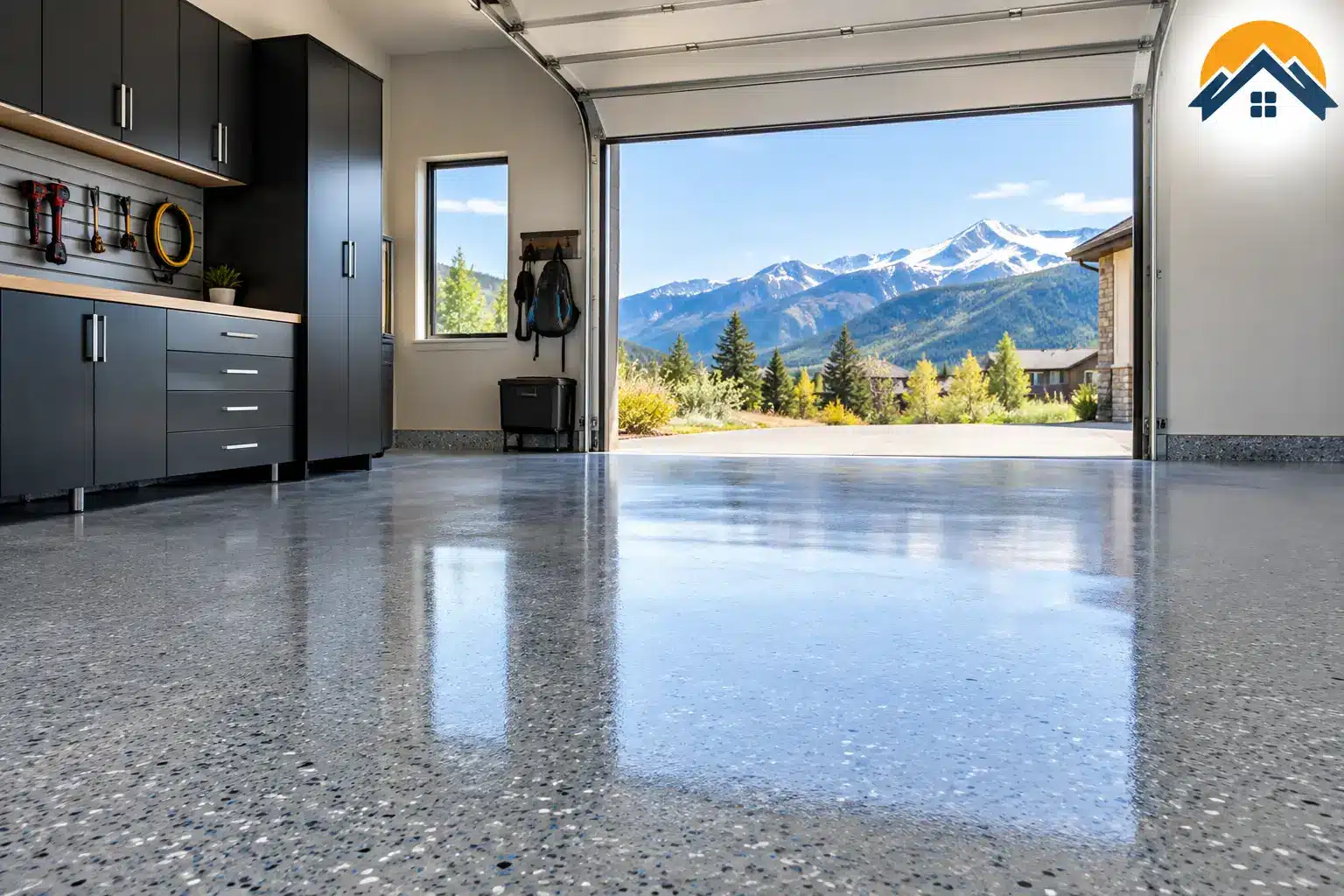
Epoxy has been a popular garage floor solution for decades because it builds a thick, attractive coating and offers excellent resistance to many household chemicals, oil, and abrasion. It is available in solid colors, decorative flake systems, metallic finishes, and quartz-style textures.
For a garage that sees typical vehicle use, epoxy can provide a durable, professional-looking result at a practical price point. Decorative flakes are especially useful because they add visual depth and help disguise dust, minor dirt, and small imperfections in the slab.
The trade-off is that standard epoxy can yellow or fade when exposed to sustained sunlight. This is more noticeable in garages with south-facing doors, windows, or daylight entering for several hours each day. Epoxy also takes longer to cure than many fast-set alternatives, so the garage may be out of service for several days. A quality UV-stable topcoat can improve its performance, but it should be part of the specified system rather than an afterthought.
Polyaspartic: Fast Curing and UV Resistant
Polyaspartic coatings are a strong option for homeowners who want a fast installation schedule and excellent resistance to UV exposure. They are often used as part of a full flake broadcast system, with a base coat, decorative chips, and a clear protective topcoat.
One advantage is cure time. Under suitable conditions, some polyaspartic systems can be installed and returned to service much faster than conventional epoxy. That can be helpful when a homeowner cannot leave vehicles or stored items outside for an extended period.
Polyaspartic finishes are also less likely to amber in sunlight, making them a practical consideration for bright Colorado garages. However, quick cure times mean the installer has less working time to apply the material correctly. Proper surface preparation, experienced application, and attention to temperature conditions are essential. Faster is not automatically better if the crew rushes the prep work.
Polyurea: Flexible Performance for Demanding Use
Polyurea floor coatings are often selected for their durability, flexibility, and fast cure characteristics. Depending on the specific product and system, polyurea can handle temperature changes well and may be a good fit for garages, workshops, and light-commercial spaces that see frequent use.
Like polyaspartic products, polyurea systems can be installed quickly, but not all formulations perform the same way. The term is sometimes used broadly in marketing, so homeowners should ask what product is being applied, how the floor will be prepared, and what topcoat will protect the finished surface.
A professionally installed polyurea or polyaspartic flake system usually costs more than a basic epoxy application. The added cost can make sense for high-use garages, sun exposure, or customers who value a shorter return-to-service time.
Concrete Stain and Sealer: A Different Look, Different Protection
Concrete stains and clear sealers are not typically considered full garage floor coatings, but they can be appropriate when the goal is to enhance the appearance of concrete without creating a thick film over it. They can offer a more natural, mottled finish and are often a fit for patios, basements, or lower-traffic utility areas.
For an active garage, a stain-and-sealer system generally provides less chemical and impact resistance than epoxy, polyaspartic, or polyurea. It may need more frequent maintenance, particularly where vehicles bring in moisture and winter residue. It is best viewed as a decorative concrete treatment, not a direct substitute for a heavy-duty coating system.
Why Preparation Decides Whether a Floor Lasts
The biggest difference between a floor that performs well and one that fails early is often hidden beneath the coating. Concrete must be clean, dry enough for the selected material, and mechanically profiled so the coating can bond correctly.
Professional preparation commonly includes repairing cracks, removing failed paint or old coatings, degreasing contaminated areas, and diamond grinding the concrete to create the proper surface profile. Acid etching alone may not be enough, especially on dense concrete, previously sealed slabs, or floors with years of oil and tire residue.
Moisture should also be evaluated. Concrete can release water vapor even when it looks dry. If moisture pressure is excessive for the chosen system, it can lead to blistering or delamination. A responsible contractor will identify concerns before coating the floor, not after the finish begins to fail.
Choosing Color, Flakes, and Texture
Most garage floor systems are available in more than basic gray. Neutral flake blends can complement exterior paint, cabinet colors, or the overall style of the home. Medium-toned blends are often the most forgiving for daily use because they hide dirt better than solid white, black, or very light finishes.
Texture deserves equal attention. Decorative flakes and broadcast aggregate can improve traction, but a heavily textured floor can be harder to sweep and may feel rougher under bare feet. The goal is a balanced surface that feels secure when wet without turning routine cleanup into a chore.
A glossy floor reflects light well and can make a garage feel brighter. A satin or lower-sheen topcoat may better hide scuffs and tire marks. There is no universal right answer, but these choices should be discussed before installation rather than made from a small sample after the work begins.
Questions to Ask Before Hiring a Garage Floor Contractor
A clear written estimate should identify the coating system, surface preparation steps, crack repair allowance, decorative options, cure time, and warranty terms. If the estimate only says “epoxy garage floor,” ask for more detail. That phrase can describe very different levels of preparation and product quality.
It also helps to ask whether the contractor uses diamond grinding, how moisture concerns are handled, whether a UV-stable topcoat is included, and when vehicles can return to the garage. Confirm whether the warranty covers both materials and workmanship, and ask how the crew will protect walls, cabinets, and belongings during preparation.
For homeowners across the Denver metro, local experience matters because concrete condition, seasonal temperatures, and garage use vary widely. Majestic Painting Company can evaluate the slab in person, explain good-better-best coating options, and provide an itemized estimate so you know what is included before work begins.
A Better Garage Starts With an Honest Assessment
The best choice is rarely the product with the flashiest name or the lowest advertised price. It is the coating system that matches your concrete, your budget, and the way your household actually uses the garage. Start with a free on-site assessment, ask for preparation details in writing, and choose a finish you will be comfortable maintaining for years to come.